What does the uniform my character is wearing look like?
Where is the rank located?
What badges should he have?
Honestly, that depends on the time period in which your scene/novel is taking place, what service the character is in, and what profession your character has in the military. The military updates uniforms every 5–10 years, adding pockets, moving rank and badges around, changing material, and using new patterns.
Many authors don’t even know this and assume the uniforms they see on the news are the uniforms the military has always used. You’ll have to do your research in order to bring realism to your story. And this is another example of why you might need a Military Technical Advisor to review your work.
As a Story Grid Developmental Editor and Book Coach, my background in military special operations makes me uniquely qualified to assess stories with military characters and settings.
Military Matters is a series of posts where I discuss how authors can accurately write about, well, military matters. My goal is to arm the authors with words that make their prose stronger. Over the next few months, I’m going to talk about how I have helped authors create authentic military characters and settings, without losing their readers in military jargon and acronyms.
The Right Uniform
If you are going to write about soldiers, one of the sure-fire things you need to get right is the uniforms, especially if you want veterans and their families to enjoy the book. Nothing irritates me more than when I’m reading a book or watching a movie and the wrong uniform is used or described.
Every soldier in the Army is issued two basic uniforms: the Army Combat Uniform (the normal uniform used daily for most Soldiers) and the Army Service Uniform (the dress uniform normally used for special events or if the Soldier works in an environment that requires a suit – like the Pentagon, for instance). Depending on the job, a soldier may also be issued and authorized to wear other uniforms. The Army has a webpage that discusses all of its new uniforms coming out and how they will be worn. If you are writing a novel set today, I recommend you take your guidance from this webpage. If you set your story in the past, you will have to do your research, which hopefully this post will help you with. And, as always, consider using a Technical Military Advisor to help with your authenticity.
This blog post will only be talking about the Army Combat Uniform and its evolution over the years, but fell free to write in the comments any questions you might have, and I’ll try and get you an answer. I’ll cover the wear of badges and tabs in another post.
Army Current OCP ACU (as of 2023)

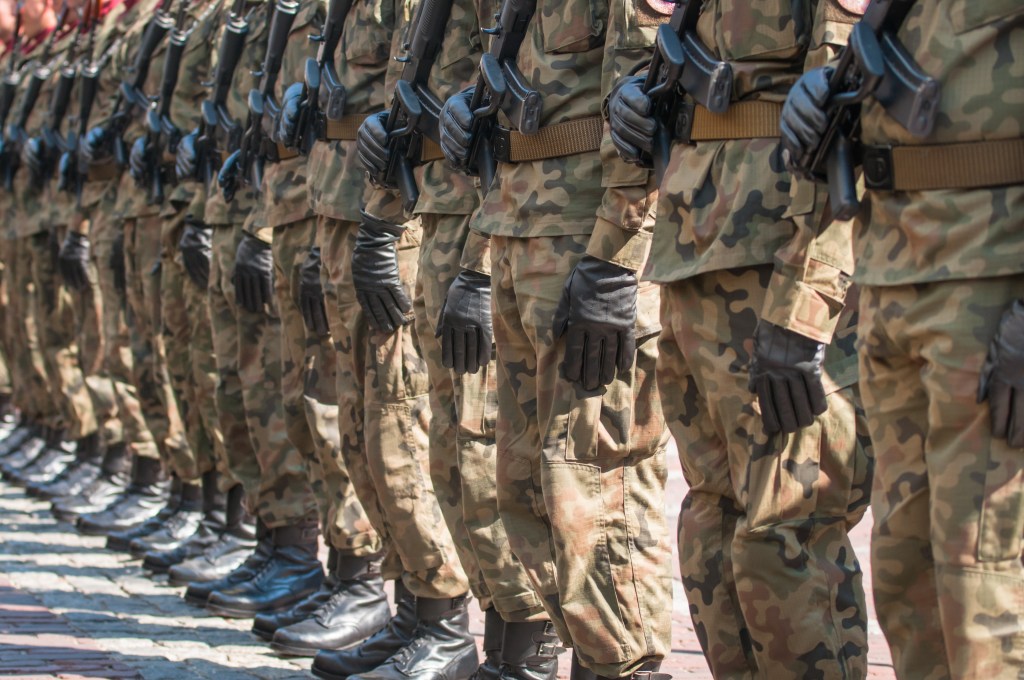
The Army transitioned fully to the Army Combat Uniform’s (ACU)Operational Camouflage Pattern (OCP) with the Scorpion W2 pattern on October 1, 2019, replacing the Army Combat Uniform’s Universal Camouflage Pattern (UCP). It was available to use since 2015, and Soldiers were able to choose between wearing OCPs or ACUs between 2015 and 2019, which made formation interesting since you had some Soldiers wearing one and some wearing the other. Both uniforms were commonly referred to as daily uniforms or ACUs.
It’s important to note that the words Army Combat Uniform doesn’t refer to the colors, but the use. There are multiple color-schemed ACUs that have been used over the years, and when Soldiers say ACUs they are referring to the color-scheme that is currently authorized for wear. ACUs refer to the uniform used most commonly in the military—it’s used for garrison duties (admin, logistics, classroom training, etc.), field exercises, training, and combat. Most Soldiers have designated ‘field’ uniforms that get ragged and dirty when they are in combat or field training, and then they have designated ‘garrison’ uniforms, which they keep clean and sharp for use when not in the field.
The uniform includes the jacket (with rank, uniform designation, US flag, and other patches I will cover later in this post), trousers, tee shirt, belt, socks, boots, and either a beret or a cap (which we will also discuss later in this post).
These OCP ACUs have a variety of features that make them superior to older uniforms. First, the uniforms are infused with the insect repellant Permethrin. As such, special care has to be taken: no softeners when washing, no laundering, no starch, no ironing, and they can’t be hung in the sun. They also have an anti-wrinkle treatment, so ironing and starch are seen as overkill.
The military only allows certain outerwear to be worn over the uniform in times of rain, snow, or cold weather, which include fleece jackets, gore-tex rain jackets, and field jackets. All these must be worn with rank and last name displayed.
Headgear
The Army ACU uniform is worn with a patrol cap, a boonie hat, or a beret.
The patrol cap and the boonie hat have rank in the center front and a name tape in the center back. Both these are used in field conditions unless there is danger of enemy combat, in which case the soldier would wear his ballistic helmet.
Berets have a flash on the front above the left eye, and a unit crest at the center of the flash (officers have rank instead of a flash). There are a few colors: black berets are worn by most of the Army, maroon berets are worn by Airborne Soldiers, Green Berets are worn by Special Forces soldiers, and tan berets are worn by soldiers in Ranger units (not to be confused with graduates of the Ranger School in general).
Uniforms of the Past
Universal Camouflage Pattern (UCP) ACUs

These uniforms were used between 2004—2019 (last date used is September 30, 2019) and replaced the BDUs.
They were not favored by soldiers, and the overall consensus was that the pattern was useless.
“The only thing that the [UCP] camo pattern on the [Army Combat Uniform] ever blended with was gravel,” one commenter wrote on the Army’s 10th Mountain Division’s Facebook page. Added another, bluntly: “Worst pattern ever.”
Battle Dress Uniforms
These were used between 1980–2004. They came in lightweight for warm weather and heavy weight for cold weather.
OG-107
These were used between 1952–1989. In the 1980s, there was a transition to the BDU uniforms. Some units wore the OG-107, and some wore the BDUs. The “Jungle Fatigue” version was an excellent uniform for tropical areas such as Vietnam and Panama (see halfway through the Wikipedia article linked above).
Desert Camouflage Uniforms

These were used from 1991 to about 2010 for soldiers assigned to desert environments.
Other Uniforms
Mess Dress—for extremely fancy situations
Cook Whites—worn by Army cooks
Flight Suit—worn by Army Pilots
Pregnancy ACUs—Ordered for pregnant Soldiers
Summary
These are the basics of the Army Combat Uniforms. There are some other specialty uniforms I didn’t cover. I’ll also cover the wear of badges and tabs in another post. If you have any questions about writing soldiers and their uniforms, let me know in the comments below. This post was current in 2023, but the Army military uniform is always evolving. You can find the most up-to-date information on current wear in the regulations.
The best way to ensure accuracy is to talk to service members who are experts in the time periods where your story takes place. A MilitaryTechnical Advisor can help you here.
Remember, the haters will look for every detail to discredit you, but your fans will love all the details that immerse them in the world you have created.
Let me know in the comments if you have any specific questions about Military Matters in writing.
 The Story Ninjas
Leave a comment